Latest News
- Home
- Latest News

UAPA is Unlawful Activity Prevention Act that was enacted in 1963, this act applies to the entire country. The provisions of this act apply also to citizens of India and abroad.
unlawful activity” refers to any action taken by individual or association (whether by committing an act or by words, either spoken or written or by signs to questions, disclaims, disrupts, or is intended to disrupt the territorial integrity and sovereignty of India.
The amendment made to the 4th schedule of the act allows the NIA to declare a person to be a terrorist if he/she is found having any kind of terror links. Currently, only organizations are designated as 'terrorist organizations' but after the change in the UAPA, 1967 an individual can also be termed a terror suspect.
The law of sedition mentioned in section 124 of ipc talk about kind of speech that is against the government which in power and invoke or incites people to harm the government or the people due to their speech.
Recently in relation to this sedition law the apex court stayed coercive action against two Telugu channels, TV5 and ABN Andhrajyothy, in FIRs registered by the Andhra Pradesh police in a sedition case. A bench comprising Justices DY Chandrachud, L Nageswara Rao, and S Ravindra Bhat expressed a prima facie view that the FIRs are an attempt to "muzzle media freedom”. “It is time we define the limits of sedition. There is a need to define the scope of offences under Section 124A (sedition) under the Indian Penal Code, especially in the context of media freedom,” the bench observed.
Read More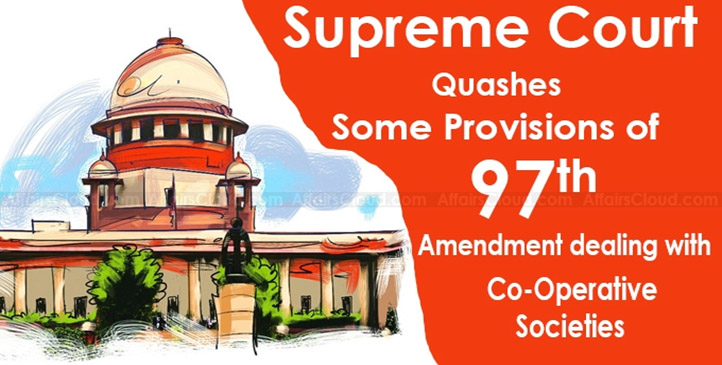
“When a citizen of India challenges a constitutional amendment as being procedurally infirm, it is the duty of the court to examine such challenge merits.”
-The Apex Court of IndiaA recent judgement on 20th July, 2021 made the headlines as the SC upheld a citizen's “Right to Challenge” a Constitutional Amendment affecting States' power. A bench comprising Justices RF Nariman, KM Joseph and BR Gavai observed that the Constitution of India is a national charter of governance affecting persons, citizens and institutions alike. The Apex Court struck down majority of the new provisions inserted through the 97th Constitutional Amendment. The reason for the amendment was the required ratification under Article 368(2) of the Constitution from the States was not obtained.
Read More
Justice Anjana Prakash is former high court judge who on the last Saturday that while the anti-terror and national security laws are to be used towards the sovereignty and protection of states, in India, they are being used for sovereignty and protection of political parties.
Honorable Justice further says “these laws cannot be permissible because they are so vague”.
In her views the definition of ‘terrorist act’ in section 15 of the UAPA is vague and that is easily susceptible to misuse.
An individual who comes up with any of his views is held and put behind bars. Like when a man said that cow's urine won't help in COVID and it is not good for COVID was put behind bars. If this the direct or indirect effect of the act in our country then there is a higher percentage of injustice done to people rather than delivering justice to the citizens. There are few principles of criminal jurisprudence, like presumption of innocence must not be dislodged, the right on being silence and burden of proof on prosecution should not be taken away as in the case of UAPA. Also, the procedure followed in UAPA is stated to be absurd by justice Prakash. It says that the court has to presume that the accused has committed the offence unless the contrary is shown by the accused.
Read More
Antitrust regulation act is a law established to closely monitor the distribution of economic power in a company. And also ensures that there remains a healthy competition in the market.
If a business in the market expands to a level where other small businesses are in danger and suffer losses due to it, then in this condition the act comes into action. It is to vanish any monopoly establish in the market.
For instance, if we take example of Microsoft in the 90’s, Microsoft in 90’s grew and expanded enormously that it was left with no competitor of its level in the market to compete with. But then Microsoft took a really smart step. In order to abstain from ATRA it helps its own competitor Apple so that they can reach a level where there is good competition between the two and the healthy competition in the market is still established.
Antitrust law is applicable on all types of businesses on all the levels may it be transportation, manufacturing or marketing etc.
Read More
A bench of Chief Justice Mohammad Rafiq and Justice Vijay Kumar Shukla said that Arbitration & Conciliation Act, 1996 is a self contained code dealing with every aspect arbitration and once an Arbitral Tribunal rejects an application disputing its jurisdiction, it cannot be challenged immediately and the arbitral proceedings may continue till passing of the award.
Reason for the same given by the court was “speedy disposal”. The court cleared that argument of the petitioner that the tribunal does not have the jurisdiction may only be available to it as ground of challenge to the award if eventually the same were to be passed again.
Read More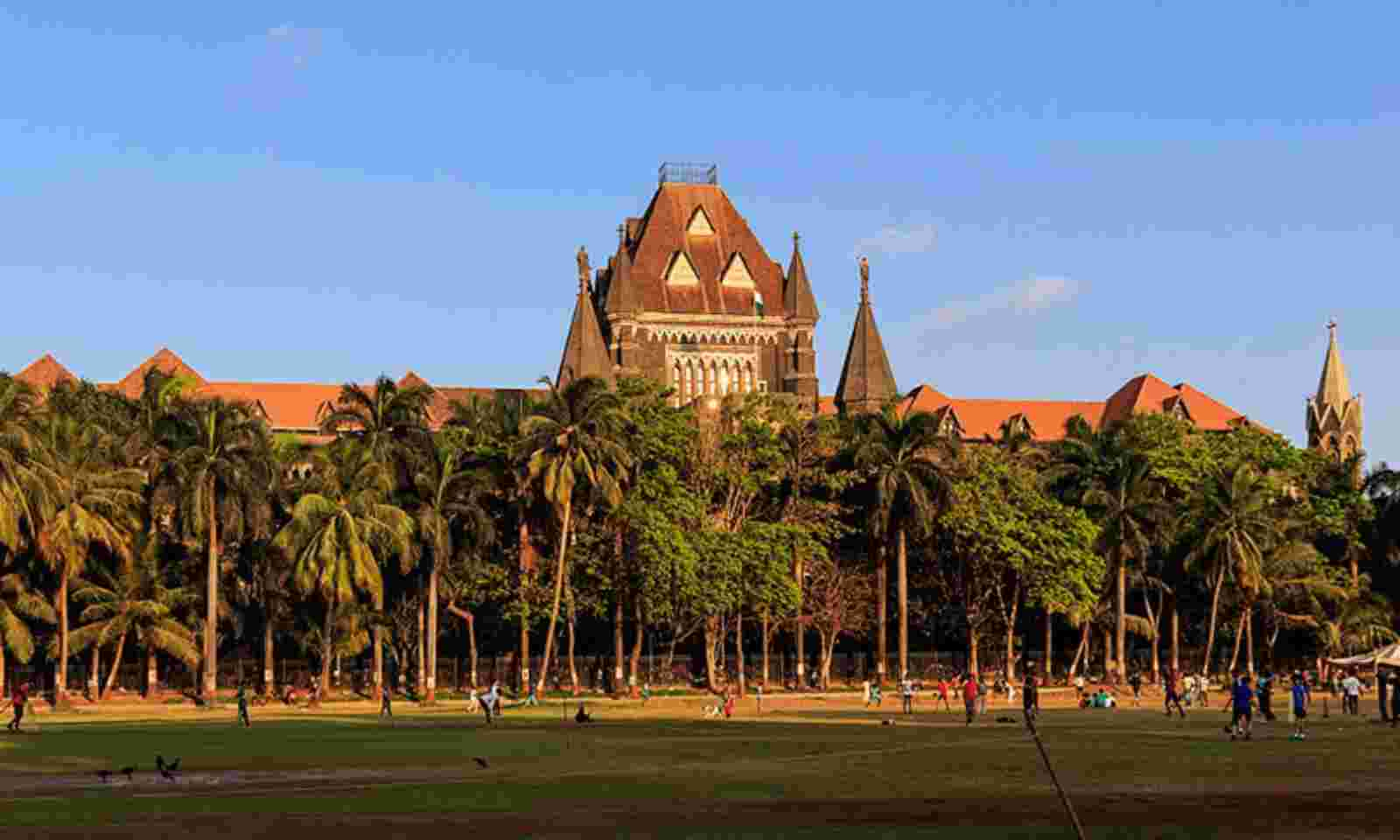
A division bench consisting of Justices SS Shinde and NJ Jamadar directed an ill prisoner namely Nirmala Kumari Uppunganti who was booked for offences under the stringent Unlawful Activities (Prevention) Act along with her husband for playing major role in planning the Naxal attack by NIA, suffering from multiple bone metastases (cancer) and stage four breast cancer to be shifted to Shanti Avedna Sadan Hospice in Bandra from Byculla Women’s prison by 15th September.
Justice SS Shinde on Tuesday said that “First we are human beings, then we are judges or advocates. Article 21 (right to life) applies with equal force applies with equal force to convicts and undertrials”
The institution in which she is directed to be shifted is for the patients who is left with no cure and the institution agreed yo take care of her till her death.
Read More